

Our programmes

STEM you do, not just study.

Curriculum-aligned, hands-on STEM for every K‑10 learner. Built to be lived, not memorised. And for the keen ones, structured pathways and mentors that point toward engineering, medicine and research.

Aligned to NEP, CBSE & State boards Hands-on · Inquiry-led · K‑10
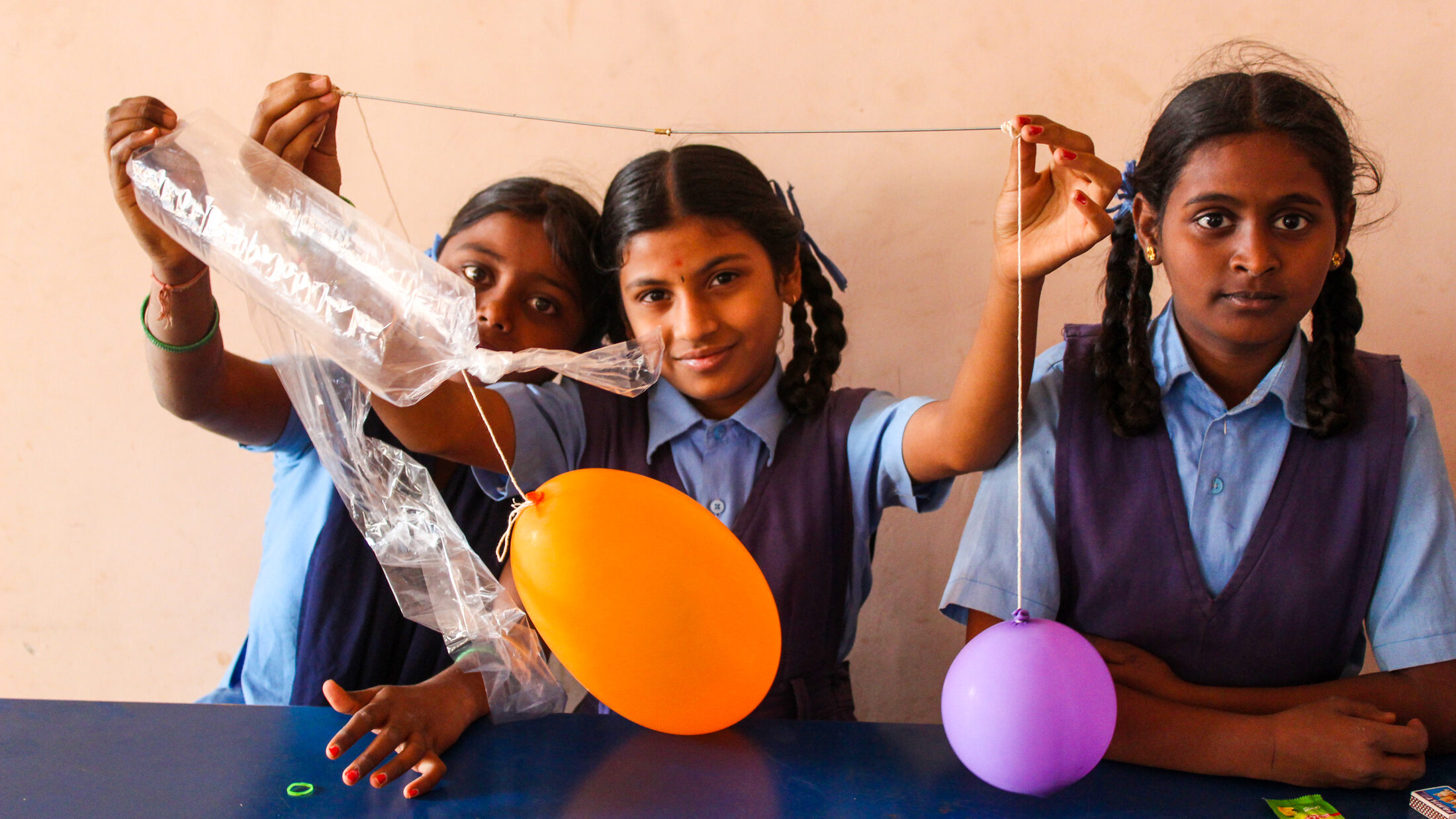
A smiling girl in school uniform holding colourful balloons during a balloon-and-bottle air-pressure experiment.

What students do and learn

What students DO

Build an air-pressure rocket, then make it fly further.

In one signature unit, students turn a plastic bottle and a balloon into a launchable rocket. Then comes the real learning: they measure, tweak the nozzle and fins, and redesign it to travel further than the last attempt.

  1. Build it. Assemble the bottle-and-balloon rocket from a simple kit, in teams of three or four.
  2. Test it. Launch, measure the distance, and record what happened.
  3. Redesign it. Change one variable (air volume, fin shape, angle) and predict the result.
  4. Explain it. Present to the class why the new design flew further, in their own words.
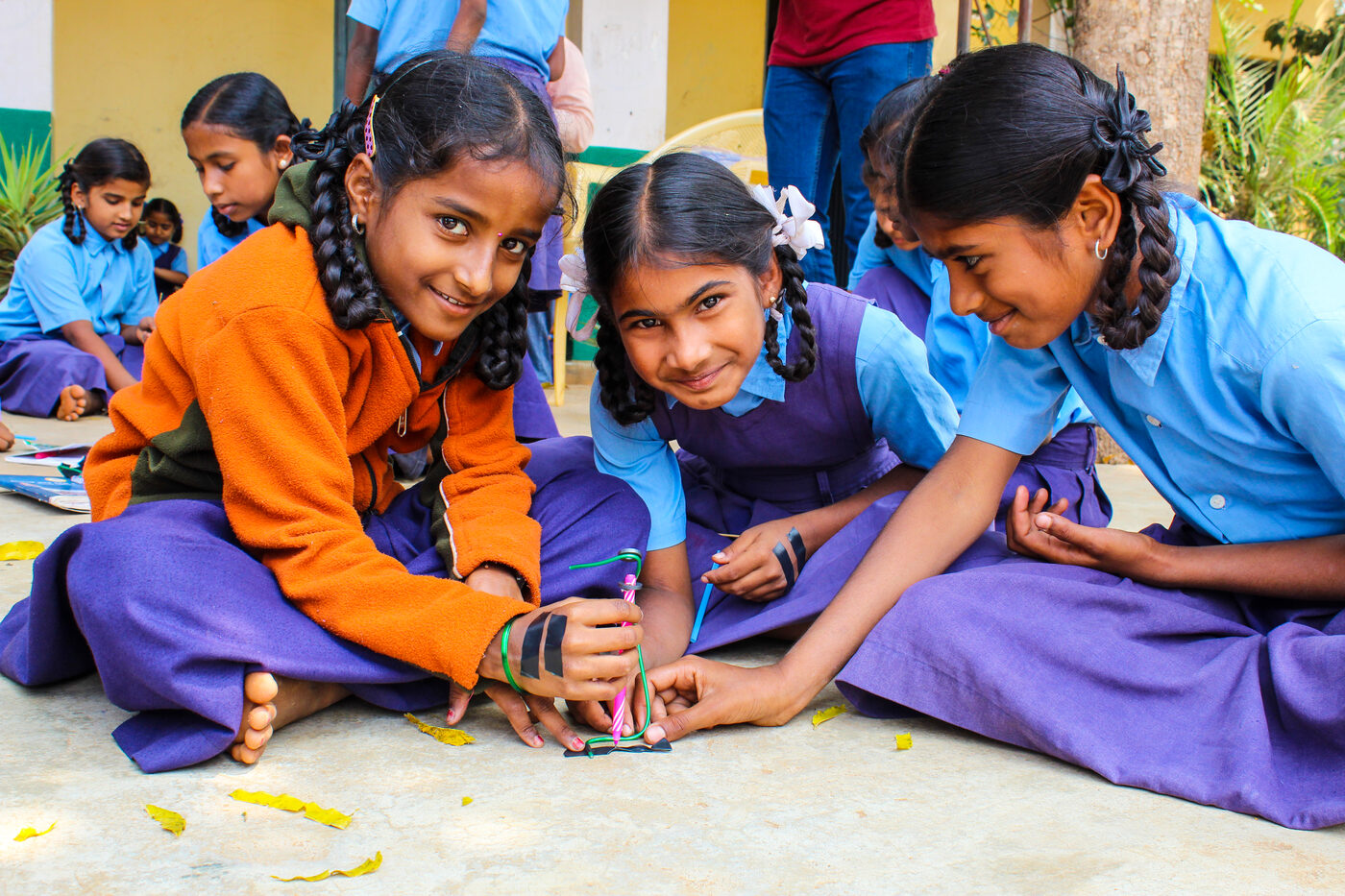
Children sitting on the floor building models from colourful hands-on materials.
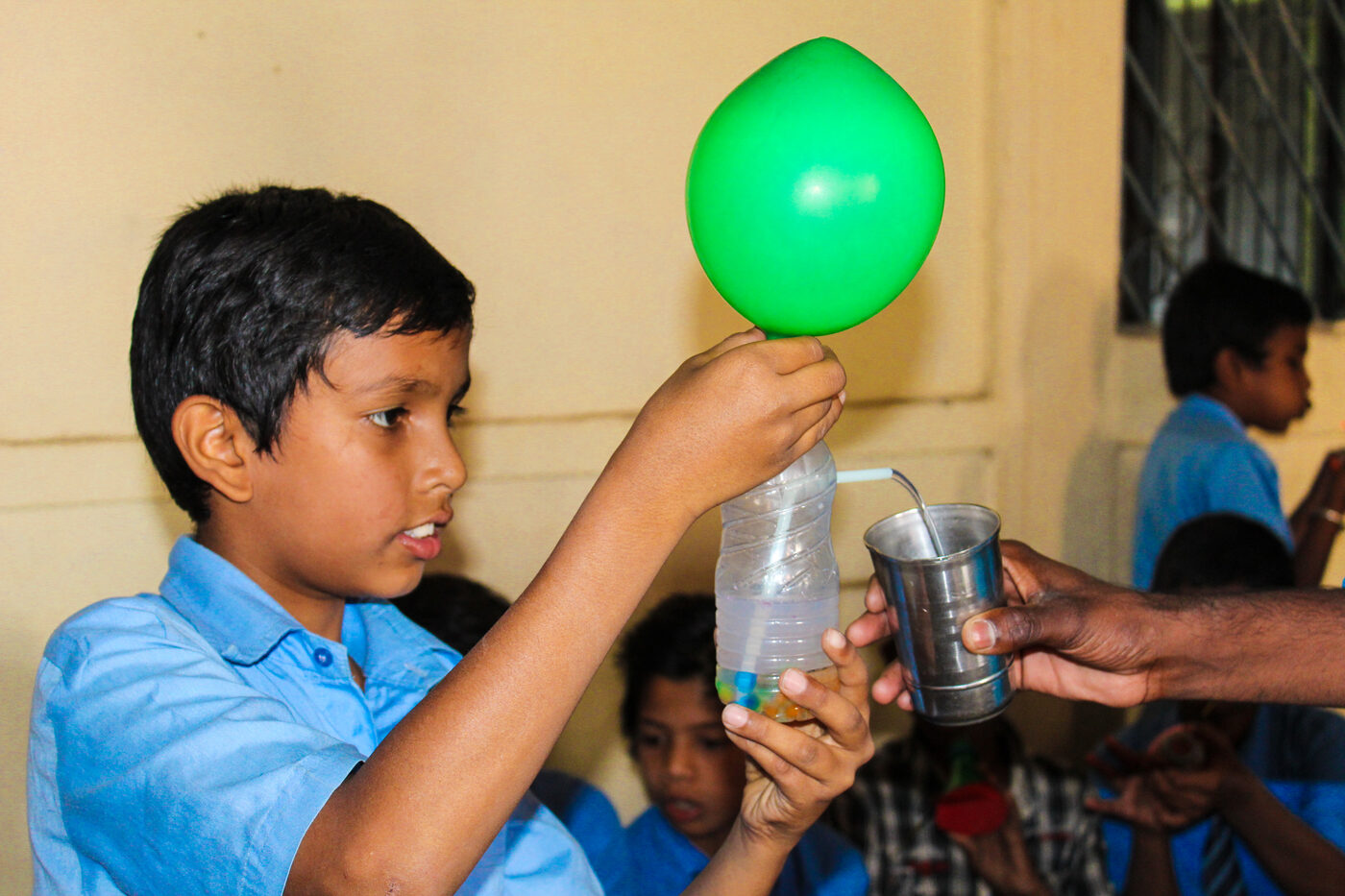
A boy in school uniform focused on a balloon-over-bottle air-pressure experiment.
What students LEARN

Concepts that stick, because they were earned.

By the end of the unit, students will:

  • Explain how air pressure and Newton’s third law make the rocket move.
  • Design a fair test by changing one variable at a time.
  • Record, compare and reason from their own measurements.
  • Connect the activity to rockets, jet engines and everyday motion.

Concept mastery

Force, pressure and energy move from abstract definitions to something students can predict and prove.

Real-world connection

Every concept is tied to something they already know: a fizzy bottle, a deflating tyre, a launching rocket.

21st-century skills

Collaboration, critical thinking and communication are practised in every iteration, not bolted on.

Confidence

“I made it fly further” is a far stronger foundation than a memorised formula.

How we teach

Four pedagogy pillars under every activity.

The rocket is just the surface. Underneath, every ISPF unit is engineered around the same four principles.

Learning by Doing

Hands on the materials first; the definition comes after the discovery, not before it.

Real-World Connection

Every concept is anchored to something the student can see in their own neighbourhood.

Iterate & Build

First attempts are meant to fail. Redesigning is where the deeper understanding is forged.

Collaborate & Explain

Students work in teams and must explain their thinking, the surest test of real understanding.

0
of students improved their conceptual understanding after one term.
The evidence

We measure understanding, not just attendance.

Across participating classrooms, students were assessed at the start and end of a term on the concepts taught through the experiential units. The gain is in genuine comprehension: being able to predict and explain, not recall.

Methodology: illustrative pre/post concept-inventory results shown for this mock-up. In the field, ISPF uses validated baseline and endline assessments per cohort, with results reported back to each partner school. Figures here are *illustrative.

Who it’s for

Built for the people who make it happen.

The same programme, explained for the two audiences who turn it into a reality in the classroom.

For educators

Everything you need to teach it well.

You don’t need to be a science specialist. The programme drops into your existing timetable and gives you the structure, materials and training to lead it with confidence.

  • Standards fit. Each unit maps to specific NEP, CBSE and State-board learning outcomes.
  • Prep time. About 15–20 minutes per session: the kit and lesson plan do the heavy lifting.
  • Ongoing support. A facilitator checks in through the term, plus a teacher helpline.
What’s included
Hands-on kit Lesson plan Teacher training Term-long support
For supporters

Equip a whole classroom.

₹2,500equips one classroom for a full term *illustrative
  • Hands-on kits for every student in the room.
  • Training and materials for the teacher who leads them.
  • Classroom-level reporting, and 80G tax exemption.
Good questions

Questions schools and funders ask us.

Does this replace our existing science syllabus?

No. It complements it. Every unit is mapped to the concepts already in your NEP, CBSE or State-board syllabus, so the programme deepens what you already teach rather than adding a separate subject.

Do our teachers need a science background?

No specialist background is required. Teachers receive hands-on training before the term begins, a step-by-step lesson plan for each unit, and ongoing support from an ISPF facilitator.

How do you show that it’s actually working?

Each cohort is assessed with baseline and endline concept inventories, and results are reported back to the school and any funding partner at the classroom level, so progress is visible, not assumed.

Take the next step

Let’s put a working lab in your classroom.

Whether you run a school, a district or a CSR programme, we’ll help you bring experiential STEM to the children who need it most.